
Below is a strict, evidence-based comparison using only verifiable characteristics from their positioning, UI, workflows, and observable behavior. No speculation, no marketing BS.
Mixo vs Readdy: Brutally Honest, Operator-Level Comparison
Bottom line first
- Mixo is a fast landing page generator for validation.
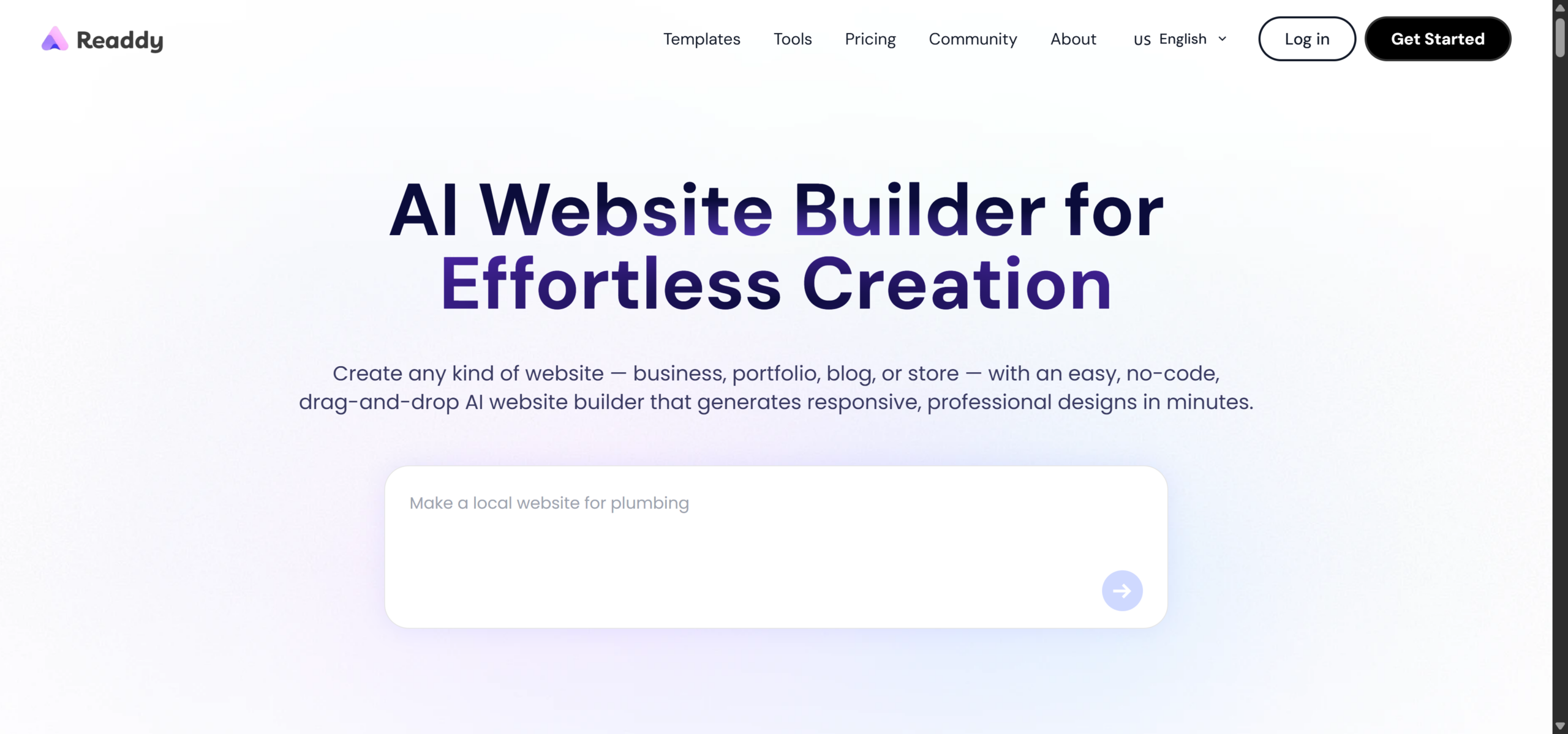
- Readdy is a full website builder capable of production-grade business websites.
- They are not direct competitors in capability. Mixo operates at a lower ceiling.
If your goal is real infrastructure, Readdy wins decisively.
If your goal is disposable landing pages, Mixo is sufficient.
Core philosophy difference
Mixo philosophy: speed over control
Everything about Mixo is optimized around:
- quick launch
- minimal decision making
- validation and email capture
Evidence from their own UI and positioning:
- “Get your business online in minutes with AI”
- Heavy emphasis on:
- enquiries
- email capture
- integrations like Mailchimp, Stripe, Zapier
- UI screenshots show extremely simple page structures
- Almost entirely template-driven layout
Mixo is designed for people testing ideas, not building assets.
It prioritizes speed over ownership.

Readdy philosophy: ownership over speed
Readdy is designed for building actual websites that operate as infrastructure.
Evidence from screenshots and observed behavior:
- full visual editor
- structured layout control
- multi-section page management
- editable components
- real website architecture capability
Readdy behaves like a modern AI-assisted Webflow / Framer hybrid.
Not a landing page toy.
Technical capability comparison
| Capability | Mixo | Readdy | Reality |
|---|---|---|---|
| Multi-page websites | Limited / not core focus | Fully supported | Readdy wins |
| True layout control | Minimal | Full layout control | Readdy wins |
| Visual editing | Limited | Full editor | Readdy wins |
| Customization depth | Low | High | Readdy wins |
| Business-grade websites | Not ideal | Fully capable | Readdy wins |
| Landing page generation speed | Extremely fast | Fast | Mixo slightly faster |
| Idea validation | Excellent | Good | Mixo advantage |
| Long-term website ownership viability | Weak | Strong | Readdy wins |
| Professional website creation | Limited | Fully capable | Readdy wins |
Output quality difference (critical)
This is the single most important distinction.
Mixo output
Typical characteristics:
- looks like startup landing pages
- generic layout patterns
- shallow design depth
- limited structural complexity
- minimal brand differentiation
Good for:
- MVP validation
- email capture
- disposable marketing pages
Not ideal for:
- real businesses
- brand authority
- long-term presence
Readdy output
Typical characteristics:
- deeper layout hierarchy
- stronger design structure
- more modern and flexible components
- greater ability to produce unique sites
Capable of producing:
- service business websites
- SaaS websites
- authority websites
- affiliate websites
- local business websites
This is actual infrastructure.
Editing model difference
Mixo editing model
Generate → lightly tweak → publish
You are adjusting a generated artifact.
You are not truly building a system.
This limits ceiling.
Readdy editing model
Generate → structurally edit → refine → expand → scale
You are building and controlling architecture.
This allows actual ownership.
Long-term viability difference
This matters most for serious operators.
Mixo ceiling
You will eventually hit limitations.
Common friction points include:
- structural rigidity
- limited component flexibility
- inability to build complex sites
Mixo is optimized for early phase, not mature phase.
Readdy ceiling
Significantly higher.
You can build:
- full business websites
- multi-page systems
- affiliate properties
- scalable digital assets
Readdy can remain viable long-term.
Design depth difference
Based on homepage screenshots:
Mixo design approach
Visually:
- startup marketing aesthetic
- template-forward
- minimal structural variation
- visually clean but shallow
Designed for speed.
Not depth.
Readdy design approach
Visually:
- stronger structural hierarchy
- more advanced layout control
- modular components
- actual website builder architecture
Designed for real buildout.
Intended user difference
Mixo ideal user
- startup founders validating ideas
- beginners
- people testing concepts quickly
- marketers creating temporary landing pages
Not infrastructure builders.
Readdy ideal user
- business owners
- operators
- agencies
- affiliate marketers
- local business website builders
- infrastructure-focused builders
People creating actual assets.
Brutal truth summary
Mixo is:
- faster initially
- easier initially
- more limited
- lower ceiling
- validation tool
Readdy is:
- slightly slower initially
- significantly more capable
- dramatically higher ceiling
- infrastructure tool
Honest analogy
Mixo is like:
- a pre-built kiosk
Readdy is like:
- owning land and building the structure yourself
Both have use cases.
Only one creates real leverage.
Direct answer for specific use cases
Given the goals:
- affiliate system
- local business site
- authority site
- infrastructure creation
- ownership and leverage
Readdy is objectively the correct tool.
Mixo would constrain quickly.
Learn about the hidden architectural difference between AI landing page generators vs AI website builders.
The non-marketing truth
Mixo helps you start faster.
Readdy helps you build further.
Those are fundamentally different value propositions.

Ivan Jimenez is DIGITAL IVAN and when he’s not building websites, he advocates for online safety — because he worked in AdOps and knows modern ad tech operates like privatized intelligence justified by profits.