
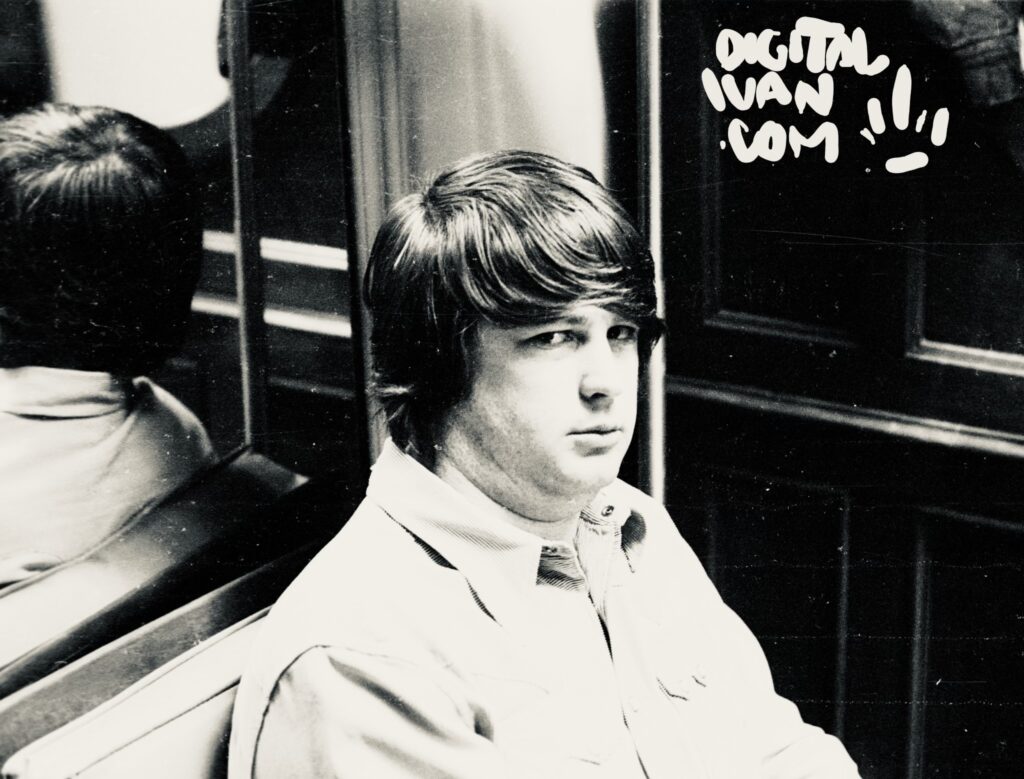
There are songs everyone knows… and then there are songs people think they understand.
Good Vibrations falls into the second category.
Most people hear it as a cheerful pop record about a guy meeting a girl and feeling something special. That interpretation works fine. It’s not wrong.
…but it’s incomplete.
The deeper you look at the song (the lyrics, the structure, the strange emotional shifts in the music) the more it starts to feel like it’s describing something else completely different.
Something psychological.
Something difficult to explain directly.
Where the Idea Came From
The central concept reportedly came from Brian Wilson.
Wilson said that when he was young, his mother told him that dogs bark at certain people because they pick up on “bad vibrations”. The idea stuck with him. People give off emotional energy, and others can feel it even if they can’t logically explain it.
That concept eventually became the title and premise of the song.
On the surface, that’s the whole story.
However, if you actually listen to the record closely, the finished song feels far more complicated than that origin story suggests.
The Music Doesn’t Behave Like a Normal Pop Song
One of the unusual things about “Good Vibrations” is how the music moves.
It doesn’t settle.
The song constantly shifts tone, rhythm, and emotional color. Sections appear, disappear, and reassemble in ways that feel almost disorienting.
It’s not accidental.
Wilson built the song using modular recording (dozens of different segments recorded in different sessions and later assembled together). At the time, this was almost unheard of, but what matters isn’t just the technique.
It’s how the song feels.
The emotional tone moves in waves:
- calm → intensity
- grounded → floating
- clarity → tension
It feels less like a traditional song structure and more like an emotional state changing in real time.
The Lyrics Are Strangely Abstract
The words themselves are also unusual.
Take the famous line:
“I’m pickin’ up good vibrations.”
That sentence is vague on purpose.
The narrator never explains why he feels that way. He doesn’t describe what the woman said, what she did, or what actually happened.
He only describes the sensation of feeling something.
Almost like he’s detecting a signal.
Which raises an interesting possibility. The song may not really be about romance at all.
It may be about perception.
A Different Way to Hear the Song
If you listen to the song through a psychological lens, a different interpretation appears.
Instead of a man describing attraction, the narrator could be describing a sudden alignment of emotional energy.
Someone who normally experiences the world as chaotic or overwhelming suddenly encounters another person whose presence feels stabilizing.
For a moment, the noise clears.
The signal comes through…
and he recognizes it immediately. Intuitively.
Brian Wilson’s Inner World at the Time
It’s difficult to talk about this song without acknowledging where Brian Wilson was emotionally during that period.
By the mid-1960s he was already dealing with serious anxiety, depression, and the early signs of deeper mental health struggles that would become more visible later in his life.
At the same time, he was pushing musical boundaries in ways almost no one else was attempting.
His work was becoming more introspective, more experimental, and more emotionally complex.
“Good Vibrations” sits right in the middle of that period.
Whether intentional or not, the music feels like it reflects someone who experiences emotional states very intensely.
Someone who is highly sensitive to subtle changes in mood and energy.
The Sound of Something You Can’t See
One of the most distinctive sounds in the song is the eerie gliding tone often associated with a theremin (technically an electro-theremin).
That’s an important sound and it matters in the context of the song.
It creates the feeling of something invisible moving through the music.
Something present, but not physical.
Which fits perfectly with the song’s central idea of sensing something you can’t logically explain.
A vibration.
A signal.
A feeling that exists before words.
Why the Meaning Was Probably Never Stated Directly
Artists often reveal things indirectly that they cannot say openly.
Sometimes that’s because the meaning isn’t fully clear even to them.
Other times it’s because explaining it directly would expose something extremely personal about their inner life, their struggles, or their family.
Brian Wilson rarely explained “Good Vibrations” in psychological terms.
Instead, he kept the explanation simple. A song about sensing energy between people.
That explanation may be accurate.
It may also be the version of the truth that was easiest to live with publicly.
The Nature of Art
Once a piece of art is released, the creator no longer controls its meaning.
Every listener brings their own experiences, emotions, and interpretations to the work.
One person hears a love song.
Another hears a psychedelic experiment.
Someone else hears a portrait of emotional sensitivity.
All of those interpretations can exist at the same time.
That’s normal and it’s natural.
That’s the mechanism that makes art work.
Art doesn’t force a single meaning.
It creates space for meaning to appear.
My Interpretation
When I listen to “Good Vibrations”, I hear a moment of emotional clarity inside a chaotic and hectic world.
Someone who normally experiences too much noise (too many emotional signals, too much confusion) suddenly encounters a person whose presence feels right.
Not logically, but energetically, and in that moment, the narrator says the only thing he can say:
I’m pickin’ up good vibrations.
He’s describing the moment the signal finally comes through.
Takeaway
Good Vibrations hits because it operates on several levels at once:
- a pop record
- an experimental studio creation
- a meditation on perception
- a portrait of emotional sensitivity
You can hear it as a simple love song, or you can hear something deeper, and that ambiguity is exactly what allows the song to keep revealing new meanings every time someone listens.



Ivan Jimenez is DIGITAL IVAN and when he’s not building websites, he advocates for online safety — because he worked in AdOps and knows modern ad tech operates like privatized intelligence justified by profits.